


Palm Oil Transparency: Raising the Bar
for Traceability to Plantation (TTP)
Online Webinar, Expert Panel, Case Study


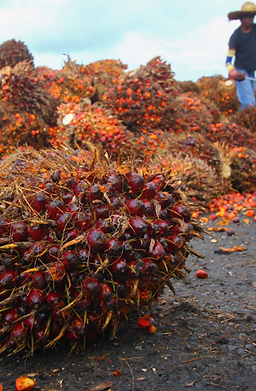

Koltiva is proud to host a pivotal palm oil webinar event in Jakarta Indonesia, uniting industry leaders, innovators, and sustainability experts to address a critical challenge in the sector: scaling high-quality traceability-to-plantation (TTP) data.
Titled “Towards Palm Oil Transparency: Raising the Bar for Traceability to Plantation,” this session will spotlight the urgent need for robust, scalable TTP solutions and foster collaboration across the palm oil supply chain to drive meaningful progress in transparency and sustainability.
📅 Date: 15th April 2026
🕒 Time: 3:00 – 4:30 PM (GMT+7)
💻 Format: Online | Microsoft Teams Webinar
🗣 Language: English


About the Event

Why Traceability to Plantation Is Now Essential for Market Access


Sustainability regulations are accelerating, with the EUDR and evolving RSPO and ISPO standards demanding verifiable, plot‑level transparency.
Yet readiness remains low: independent smallholders manage a large share of Indonesia’s palm oil area but few are mapped, verified, or certified, while many companies still rely on mill‑level or radius‑based data that cannot meet due‑diligence requirements.
Fragmented, inconsistent data across multi‑tier supply chains further increases risk and inefficiency.
This session helps stakeholders close
the last‑mile traceability gap and advance
scalable, high‑quality TTP.


Only 1% of independent palm oil smallholders
in Indonesia are certified

Despite years of progress, the industry continues to struggle with fragmented and incomplete data.
Many smallholders, who manage a significant share of oil palm cultivation, remain unmapped. In Indonesia alone, independent smallholders oversee approximately 41% of the national oil palm plantation area, equating to 6.7 million hectares.
Yet, alarmingly, only 1% of these are certified to meet traceability and legality requirements under EUDR


Our Key Speakers & Moderator


More Speakers to be Announced


The Hidden Risk in Your Supply Chain:
Why Companies Must Act Now on Traceability To Plantation (TTP)


Global sustainability regulations are accelerating, and the palm oil sector now stands at one of its most defining turning points. With the EU Deforestation Regulation (EUDR) entering enforcement and RSPO and ISPO standards increasing their expectations, supply chain transparency is shifting from broad commitments to strict, verifiable, plot‑level evidence. At the core of this shift is the need for accurate Traceability to Plantation (TTP), a standard that demands precise geolocation, legality verification, and end‑to‑end data integrity.
However, the readiness gap remains vast across the industry. Independent smallholders, who manage nearly half of Indonesia’s palm oil area, are largely unmapped, uncertified, and unsupported in meeting new regulatory thresholds. While they play a critical role in maintaining supply continuity, only a small fraction currently meets expectations for traceability and legality, revealing a deep disconnect between regulatory ambition and on‑the‑ground realities. For companies, this challenge extends beyond smallholders. Corporate disclosures still fall short of full traceability, with many organizations unable to map raw materials back to plantation boundaries despite previously announced commitments. Incomplete, inconsistent, or radius‑based datasets are still common, limiting spatial accuracy and undermining compliance credibility.
Compounding the issue is the persistent fragmentation of data across multi‑tier supply chains. Traders, cooperatives, mills, and downstream buyers often operate in silos, generating duplicated, incompatible, or unverifiable datasets. Without interoperability, information degrades at each transaction point, increasing operational inefficiencies and elevating the risk of non‑compliance. As regulatory scrutiny and market expectations intensify, these data gaps can lead to serious consequences: shipment delays, reputational exposure, and even loss of market access, particularly for companies supplying the EU.
The robust plot‑level TTP is a strategic imperative that underpins regulatory compliance, commercial resilience, investor confidence, and long‑term competitiveness. This session is designed to help industry actors confront these challenges directly, offering practical guidance, tested approaches, and field‑based insights to close the last‑mile traceability gap and advance scalable, high‑quality TTP across the sector.


Webinar Agenda

3:00 PM — 3:05 PM (5 minutes) | Opening Remarks
Moderator from Koltiva. Introduction to the session theme. Growing regulatory & market pressure for TTP in palm oil supply chains (EUDR, RSPO, ISPO). The importance of plot‑level traceability, risk mitigation & smallholder inclusion
3:05 PM — 3:30 PM (25 minutes) | Masterclass: Palm Oil Transparency, Raising the Bar for TTP
Speaker: Luca Fischer, Senior Head of Markets, Koltiva
Focus: Deep dive into TTP challenges & opportunities across corporate and smallholder segments
Practical, scalable approaches to achieving high‑quality, verified TTP data
3:30 PM — 3:55 PM (25 minutes) | SOCFIN Case Study: Implementing Traceability to Plantation at Scale
Speaker: Thomas Lavreys, Sustainability Coordinator, SOCFIN
Focus: SOCFIN’s upstream perspective: estates & smallholder networks. How KoltiTrace supports traceability mapping & compliance. Lessons learned, successes & challenges from real implementation
3:55 PM — 4:25 PM (30 minutes) | Panel Discussion & Live Q&A
Theme: Challenges, Opportunities & Collaboration for Scalable TTP
4:25 PM — 4:30 PM (5 minutes) | Closing Summary & Key Takeaways
TTP as a strategic & operational imperative. Final reflections & practical next steps for participants


Why Should You Attend?
This webinar is designed specifically for sustainable agriculture industry professionals, compliance practitioners, and sustainability specialists in the Europe, Middle-East and Africa (EMEA), Asia Pacific (APAC), to Latin America region.

Stay Ahead of Industry Trends: Gain access to recent insights on the latest advancements in sustainable agriculture and supply chain traceability from global experts.
Navigate Complex Regulations: Gain insights from KOLTIVA’s experts on how to comply with the European Union Deforestation Regulation (EUDR) and other sustainability regulations.
Expert-Led Discussions: Hear from top voices in agriculture, sustainability, and technology as they share practical strategies and solutions to help you drive sustainable growth in your operations.
Global Perspective: Discover region-specific challenges and solutions across Latin America, Europe, the Middle East, and Asia Pacific, and learn how to apply them to your business.
Actionable Insights: Walk away with real-world strategies, best practices, and tools that can immediately improve your sustainability efforts and strengthen your competitive edge.
Collaborate and Network: Connect with like-minded professionals, potential partners, and leaders in the agriculture and sustainability sectors who are shaping the future of responsible agriculture.


Watch a Snapshot of
our EUDR Solutions


.jpg)
-
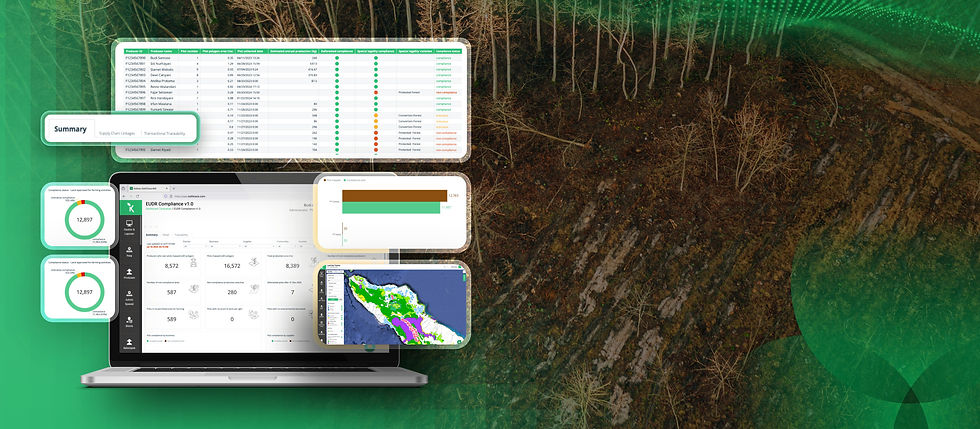
Streamline supply chain mapping and verification with integrated Koltiva ecosystem technology
-
Risk assessment with primary and secondary data
-
Land Use Tracker for EUDR deforestation maps and alert verification
-
Automated due diligence report
